Looking at homes on Providence’s East Side and wondering what the architecture is really telling you? In 02906, style is more than curb appeal. It often gives you clues about layout, upkeep, parking, and even whether exterior changes may be reviewed through a local historic district process. If you want to understand what you are seeing in College Hill, Wayland, or Blackstone, this guide will help you read the homes with more confidence. Let’s dive in.
East Side architecture is layered
Providence’s East Side is not defined by one single look. It is a layered architectural landscape shaped over different periods of growth, and that is a big reason the area feels so distinctive.
College Hill holds much of the city’s colonial and Federal core. Rhode Island Historical Preservation & Heritage Commission documentation describes about 120 acres and 338 historic structures in the district, including 63 colonial buildings and 275 Federal-period structures. That concentration gives parts of the East Side a sense of architectural depth that is rare in one neighborhood.
Wayland and the Blackstone, Cole, and Grotto area developed later. Most construction there was concentrated from the late 19th century through the 1930s, with Blackstone also including later infill built after 1980. In practical terms, that means your home search may span everything from true colonial-era houses to revival styles, Victorian homes, mid-century properties, and newer infill.
Style and preservation are not the same
This is one of the most important things to understand as a buyer. A home’s architectural style does not automatically tell you what rules apply if you want to change the exterior.
On the East Side, the key distinction is between National Register status and local historic district zoning. The National Register recognizes historical significance, but local historic district zoning is what usually controls exterior alterations and new construction. Providence is one of Rhode Island’s certified local historic district communities, and College Hill is one of the city’s long-established local districts, first designated in 1960 and later extended in 1977 and 1990.
If a property is in a local historic district, exterior work is reviewed through the permit process. That is why buyers should confirm the exact parcel status early, rather than assuming a renovation, addition, or exterior update will be simple because of the style alone.
Colonial homes on the East Side
True Colonial vs. Colonial Revival
On Providence’s East Side, the word “Colonial” can describe two different things. It may refer to an actual colonial-era house, especially in College Hill, or to a later Colonial Revival home that borrows colonial-era forms.
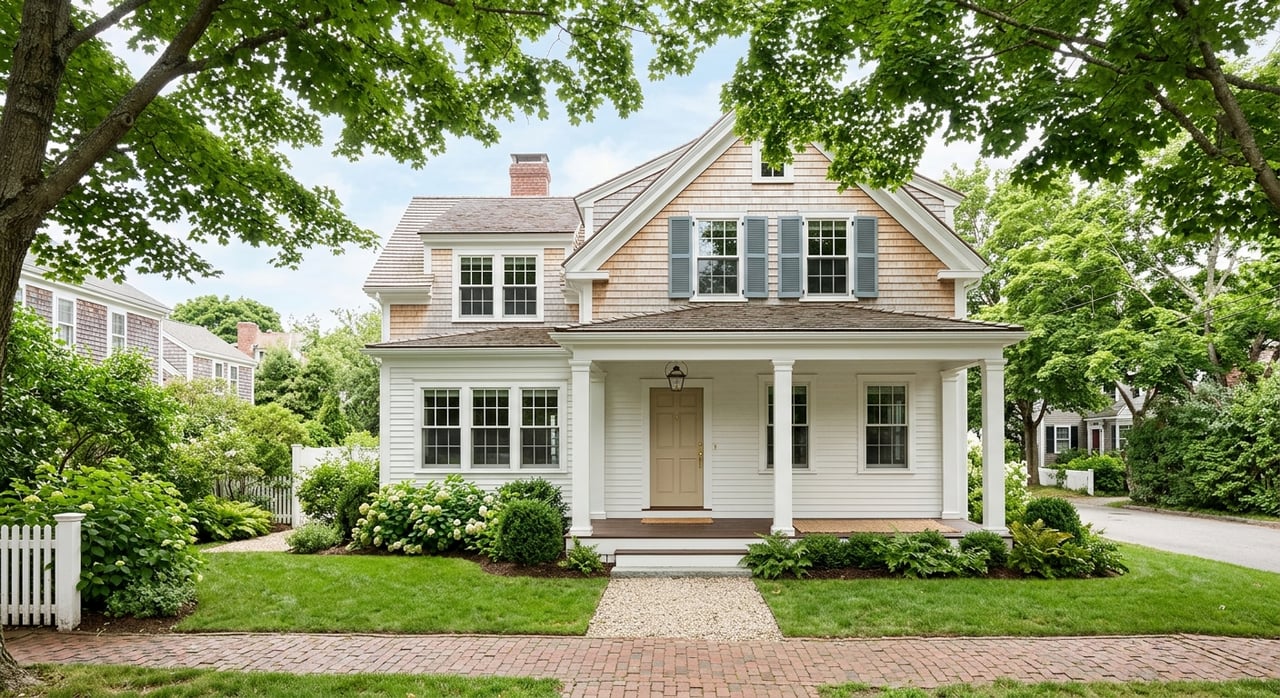
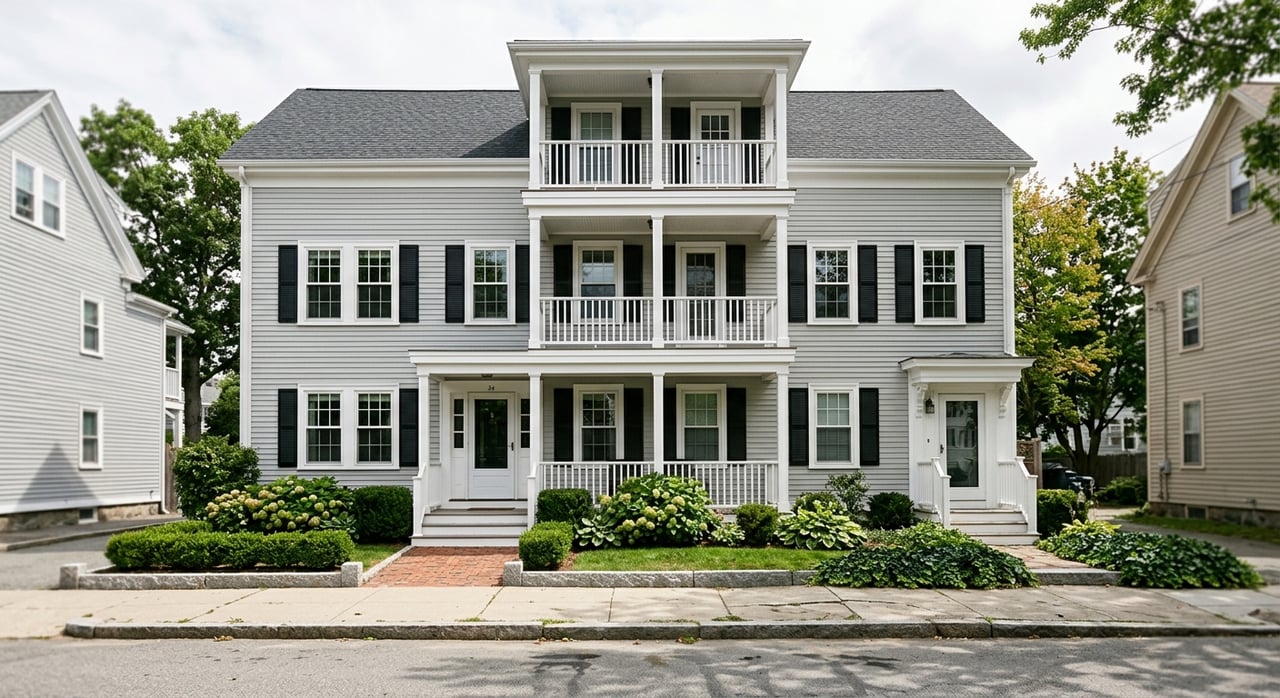
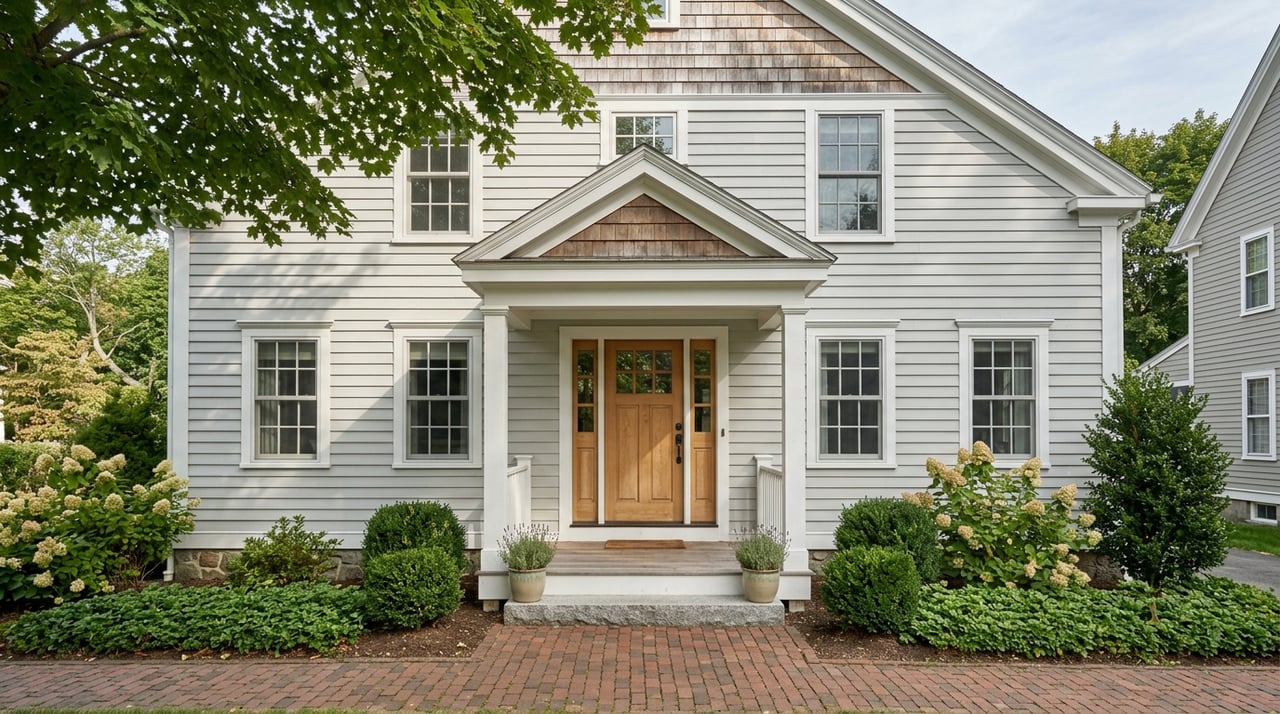
Colonial Revival houses often include pedimented or gabled windows, prominent entries, pilasters or columns, fanlights or sidelights, and Palladian windows. In Wayland and Blackstone, common examples are two- to two-and-a-half-story houses with rectangular massing, three- or five-bay facades, side- or hip-roof forms, and traditional sash windows.
How Colonial homes usually live
These homes often feel more formal in their layout. Rooms tend to be more defined and vertically organized, which can appeal to buyers who like separate living spaces and a classic New England feel.
That said, formality can come with tradeoffs. Painted wood trim, sash windows, masonry, and slate elements often need recurring attention. If you love the look, it helps to be realistic about the maintenance rhythm that may come with it.
Victorian homes and their character
What makes a Victorian stand out
Providence’s East Side has a strong Victorian presence, especially in later-developing sections. Queen Anne, one of the best-known Victorian forms, is defined by asymmetrical floor plans, mixed materials, intersecting gables, dormers or turrets, patterned shingles, stained glass, and spindlework on porches and entryways.
On the East Side, that often translates into homes with a lot of visual texture. A Victorian can be the house that catches your eye first on a block because of its detail, shape, and layered exterior materials.
What buyers should expect inside
Victorian homes can feel more compartmentalized than newer open-concept houses. You may find more irregular circulation and a layout that reflects how people lived in an earlier era.
For many buyers, that is part of the appeal. You get craftsmanship and personality, but you may also take on more exterior maintenance. Trim, shingles, porches, and mixed materials usually require careful upkeep over time.
Mid-century homes on the East Side
A different way of living
The East Side has less mid-century stock than colonial or revival housing, but it still matters in a home search. Mid-century Modern architecture is often long and low, with more glass and a simpler, more horizontal profile. Ranch-style guidance from the National Park Service also notes that open floor plans and indoor-outdoor living became common in the 1950s.
In Blackstone, later houses from the 1940s through the 1960s often show another shift in daily life: garages integrated into the house massing. That reflects the rise of automobile ownership and can make these homes feel more practical for modern routines.
Why some buyers prefer mid-century
Mid-century homes often offer less ornament and a somewhat easier maintenance profile than a high-detail Victorian. They may also feel more casual and easier to move through, especially if you prefer fewer formal rooms.
Still, simpler does not always mean problem-free. Buyers should look closely at window replacement, insulation, and how much original mid-century character remains after later updates.
Newer infill homes in 02906
What newer construction usually means here
On the East Side, newer construction rarely means a brand-new subdivision. More often, it means infill added into an established street pattern.
In the Blackstone district, the historic district nomination notes that 13 buildings were constructed since 1980. Those later houses are generally consistent in scale and materials with the surrounding neighborhood, which helps them fit into the broader streetscape.
The appeal of newer infill
For buyers, newer infill can offer contemporary function with fewer historic-system concerns. You may find updated layouts, newer systems, and a more straightforward day-to-day living experience.
Even so, newer does not automatically mean unrestricted. If the home sits within a local historic district, exterior changes may still need review. That is why location and district status matter just as much as the age of the house.
What style can tell you during a search
Layout clues
Architectural style can be a useful shortcut when you are narrowing options. Colonial and Colonial Revival homes usually suggest more formal, room-defined interiors. Victorian homes often signal more visual complexity and less predictable circulation.
Mid-century homes often feel more horizontal and less ornate. Newer infill tends to prioritize function and updated systems. If you are trying to match a house to your daily routine, those broad patterns can help you focus your search faster.
Maintenance clues
Style also hints at upkeep. Wood clapboards, traditional sash, decorative trim, porches, patterned shingles, and older masonry usually point to recurring exterior work.
By comparison, mid-century and newer homes may have fewer decorative parts, but that does not always mean less upkeep overall. Instead, the maintenance questions often shift toward things like window performance, integrated garages, and whether later changes fit the original design.
Parking and daily practicality
For many buyers, the real question is how the home supports everyday life. Wayland and Blackstone are useful examples because both were planned as suburban neighborhoods with relatively small lots, yet many houses still have off-street parking and original or early garages.
That combination is part of what makes the East Side so appealing. You can often find historic character in a city neighborhood without giving up practical features like easier parking access.
Smart questions to ask before you buy
Confirm the district status
Ask whether the property is in a local historic district, only in a National Register district, or neither. This is the clearest way to understand whether exterior changes will likely be reviewed through the city’s process.
Ask what is original
A listing’s style label may only tell part of the story. A house described as Colonial may include Colonial Revival alterations, and a Victorian home may have later porch or window replacements. Ask what features are original, what was changed, and when those changes were made.
Consider how style affects value and fit
On the East Side, style is not just cosmetic. It can affect the lot, the presence of a garage, the amount of exterior maintenance, and the likely path for future updates.
The right choice depends on your goals. You may want preservation and architectural detail, easier day-to-day living, or a home with a more contemporary renovation path. Understanding the style helps you match the property to the life you want to live in it.
Why local guidance matters in 02906
On Providence’s East Side, two homes with similar square footage can live very differently because of architecture, lot pattern, and district context. That is why local knowledge matters when you are comparing options across College Hill, Wayland, and Blackstone.
A calm, informed approach can help you look past listing shorthand and focus on what really affects your decision. If you are weighing architectural character against maintenance, layout, parking, or future exterior plans, working with a team that understands the East Side block by block can make the process much clearer.
If you are exploring homes in 02906 and want practical guidance on how style, location, and long-term fit come together, connect with The Jodie Jordan Group.
FAQs
What architectural styles are common on Providence’s East Side?
- Providence’s East Side includes Colonial and Federal buildings in College Hill, plus Colonial Revival, Victorian, mid-century, and newer infill homes in areas like Wayland and Blackstone.
What is the difference between Colonial and Colonial Revival homes on the East Side?
- A true Colonial home dates to the colonial era, while a Colonial Revival home was built later and uses colonial-inspired features such as symmetrical facades, prominent entries, and traditional sash windows.
Do historic-style homes in Providence always have renovation restrictions?
- No. Style labels and preservation rules are not the same. Local historic district zoning is what usually controls exterior alterations and new construction, not the style name alone.
What should buyers know about Victorian homes in 02906?
- Victorian homes often offer strong architectural character, asymmetrical layouts, and decorative details, but they may also require more ongoing maintenance for trim, porches, shingles, and mixed materials.
Are mid-century homes on Providence’s East Side easier to maintain?
- They often have less ornament than Victorian homes, which can simplify some upkeep, but buyers should still evaluate items like windows, insulation, and the impact of later renovations.
Does newer construction on the East Side mean fewer historic concerns?
- Sometimes, but not always. Newer infill may offer updated systems and function, yet exterior changes can still be reviewed if the property is within a local historic district.