If you are looking for multifamily investment opportunities in Northern Rhode Island, you are not alone. This part of the state offers a practical mix of older housing stock, steady renter demand, and transit-connected locations that can make small multifamily properties worth a closer look. Whether you are buying your first rental or adding to a portfolio, understanding where demand comes from and what to evaluate can help you make smarter decisions. Let’s dive in.
Why Northern Rhode Island Stands Out
Providence County is a large rental market with 278,586 housing units, a 56.6% owner-occupied rate, a median owner-occupied home value of $339,100, and a median gross rent of $1,242. Those numbers point to a market where rentals play an important role in the local housing mix. For investors, that creates a strong starting point for evaluating multifamily opportunities.
The City of Providence has also identified its housing stock as heavily made up of two- and three-family homes, with one city strategy report putting those properties at 44.6% of the housing stock. That matters because the local market is not defined only by large apartment buildings. In many cases, the most realistic opportunities are smaller properties that can be improved, stabilized, and managed well.
Providence’s planning direction also supports continued housing activity. Recent comprehensive-plan amendments emphasize inclusionary zoning, anti-displacement measures, and reduced or eliminated parking minimums. At the same time, city materials identify universities and hospitals as major employment, education, and cultural centers, which helps support ongoing rental demand in nearby areas.
Where Demand Is Strongest
Providence Core
Providence remains the clearest demand anchor in the region. Brown University, Providence College, Johnson & Wales University, and Rhode Island College all operate campuses in the city. Brown University Health is also based in Providence and includes several major hospitals and the largest multi-specialty practice in Rhode Island.
This concentration of education and health care supports year-round rental demand in areas such as College Hill, the East Side, Downtown, Smith Hill, Upper South Providence, and Mount Pleasant. For investors, that does not guarantee performance, but it does help explain why well-located multifamily properties in and around the urban core continue to attract attention.
Transit adds another layer of strength. Providence Station is served by Amtrak and MBTA commuter rail, and the city highlights RIPTA bus service and regional rail access as key transportation assets. RIPTA’s Downtown Transit Connector also links Providence Station to the Hospital District on a high-frequency corridor, and RIDOT notes that Providence Station is one of the highest-ridership stations in the MBTA commuter rail system.
For investors, transit access is more than a convenience. It can support renter demand, especially in locations near campus, hospital employment centers, and downtown services. When you underwrite a deal, proximity to reliable transportation should be part of the value story.
Pawtucket and Central Falls
Pawtucket and Central Falls stand out as the strongest transit-linked submarket in northern Providence County. RIDOT and RIPTA describe the Pawtucket-Central Falls Transit Center as a key connection point between MBTA commuter rail and RIPTA’s statewide bus network. That creates a logical setting for commuter-oriented rentals that serve both Providence and Boston-linked demand.
RIHousing’s 2024 low- and moderate-income housing chart shows both municipalities meeting the state’s 10% threshold. That figure does not tell you whether a specific property is a good investment, but it does reinforce the idea that these are dense housing markets with sustained policy attention and an established rental presence.
If you are looking for a location with regional access and an urban housing pattern, this submarket deserves a serious look. The opportunity here is often tied to practical, workforce-oriented rentals in well-connected locations.
Woonsocket and the Blackstone Valley
Woonsocket is one of the clearest places in northern Rhode Island to study older multifamily inventory. The city’s comprehensive plan describes residential high-density areas with a significant mix of single-family, two-family, three-family, and larger multifamily homes. That kind of building stock can create opportunities for investors who are comfortable with renovation and active property management.
Woonsocket’s planning documents also reference downtown, river corridor, and historic-structure overlays. In addition, the city has continued brownfield assessment and redevelopment work on former mill properties. For investors, that can point to adaptive-reuse potential, but it also means environmental diligence should be part of the process early on.
RIHousing’s 2024 chart also lists Woonsocket among the municipalities meeting the 10% threshold. In practical terms, this market often appeals to buyers who are looking for older assets with room for improvement rather than newer suburban-style apartment product.
What Property Types Offer Opportunity
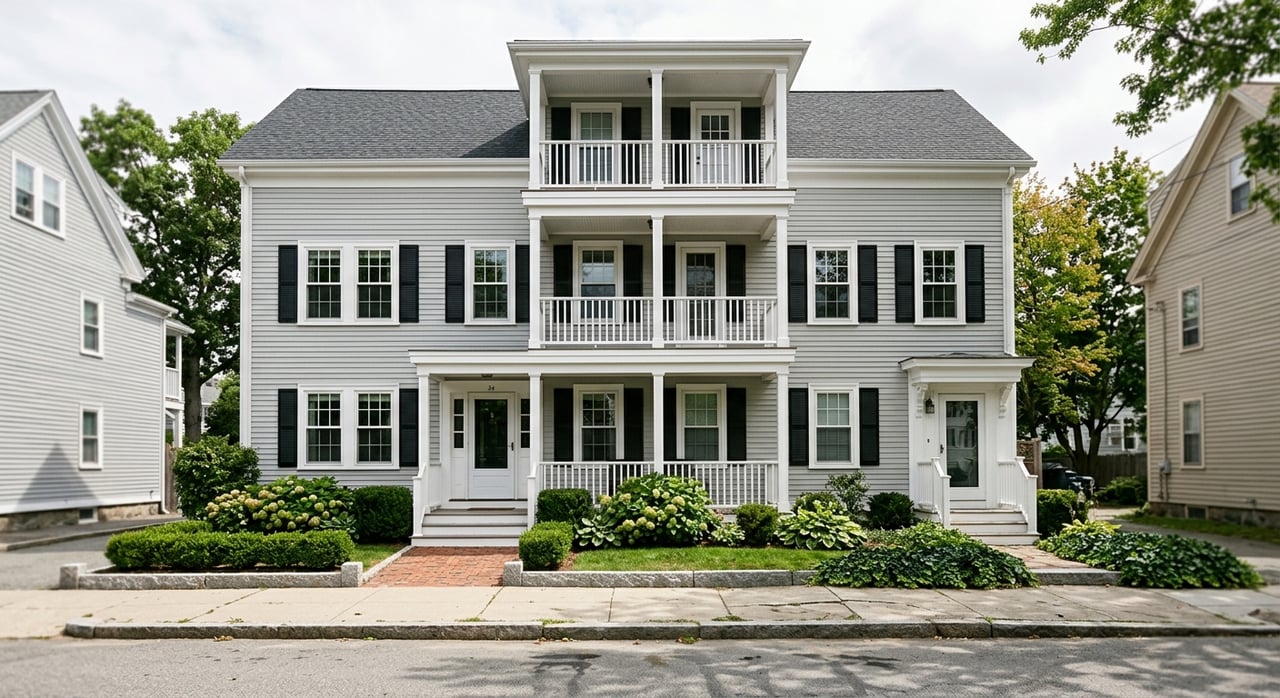
In Northern Rhode Island, the main opportunity set is often small-balance multifamily. That includes two-family homes, three-family homes, triple-deckers, older walk-up apartment buildings, and some mixed-use buildings that can be stabilized or repositioned over time.
Providence’s historic-district materials specifically reference early-20th-century triple-deckers in College Hill. The city’s Landmarks District framework also includes an Industrial & Commercial Buildings District with rehabilitation incentives for older industrial and commercial buildings. That tells you something important about this market: many viable investment opportunities are older properties with character, complexity, and renovation needs.
In other words, you may not find the best value in brand-new inventory. You may find it in buildings where better operations, thoughtful updates, and disciplined budgeting create a stronger long-term outcome. In this market, underwriting quality often matters just as much as the address.
How To Evaluate a Multifamily Deal
Confirm the Income Story
The first question is whether the income story is real. You should verify the legal unit count, current rent roll, lease structure, vacancy history, and whether the building is actually performing the way a seller’s numbers suggest.
This is especially important in older two- and three-family properties. A listing may show upside, but that upside is not always easy to capture. If rents are below market, you still need a realistic path to improvements, turnover, and compliance.
Look Closely at Capital Needs
The second major question is capital expenditure. Older buildings in this region often require a close review of roofs, boilers, electrical systems, plumbing, windows, insulation, and common areas.
A property that looks attractive on a per-unit basis may become much less attractive once repair costs are factored in. Strong investments in this market are often the ones where expected rent growth can reasonably support the renovation plan.
Check Regulatory and Physical Risks Early
Providence’s Historic District Commission states that the city has eight local historic districts covering about 2,600 properties. Exterior changes in those districts require review and approval. If you are considering a property in a historic district, your renovation timeline and budget should reflect that process from the start.
Floodplain review matters too. Providence’s planning division serves as the floodplain management agency and works with flood-zone regulations and FIRM maps. For low-lying, river-adjacent, or older properties, these checks should happen early in your due diligence rather than after you are deep into the deal.
In Woonsocket, you should also confirm whether downtown, river corridor, or historic-structure overlays affect your plans. A building may seem straightforward at first glance, but the local review path can shape what is practical.
Understand the Local Policy Direction
Providence is actively pursuing anti-displacement measures, inclusionary zoning, and parking-policy changes. If your business plan involves renovation, conversion, or redevelopment, it is smart to confirm that your assumptions line up with the current local framework.
Policy direction does not automatically stop a project, but it can affect timing, design, and costs. The earlier you understand those rules, the better your underwriting will be.
What Investors Should Watch Most
The strongest multifamily opportunities in this region are often clustered near four demand anchors:
- College and university campuses
- Hospitals and health care employment centers
- Rail access
- High-frequency bus service
In Providence, that often points you toward older small buildings near the urban core and institution-rich areas. In northern Providence County, it often points toward dense, older markets such as Pawtucket, Central Falls, and Woonsocket, where transit access and renter demand can support a more hands-on strategy.
That does not mean every property near transit or a campus is a good buy. It means those locations usually deserve careful attention because demand drivers are easier to identify and explain.
Why Local Guidance Matters
Multifamily investing in Northern Rhode Island can look simple on paper, but the details matter. Legal unit counts, historic review, floodplain considerations, renovation scope, and neighborhood-level demand all shape whether a property truly fits your goals.
That is where local market knowledge can make a real difference. When you understand how Providence, Pawtucket, Central Falls, and Woonsocket each behave as rental markets, you can compare opportunities with more confidence and fewer surprises.
If you are exploring multifamily opportunities in Providence or northern Rhode Island, working with a team that understands both the numbers and the local context can help you move with clarity. The Jodie Jordan Group offers thoughtful, high-touch guidance for investors who want a smart entry point, a portfolio addition, or help evaluating the right property in the right location.
FAQs
What types of multifamily properties are common in Northern Rhode Island?
- Common options include two-family homes, three-family homes, triple-deckers, older walk-up apartment buildings, and some mixed-use properties.
What makes Providence a strong multifamily market?
- Providence benefits from year-round rental demand tied to universities, hospitals, downtown employment, and strong transit access through rail and bus service.
What should you verify before buying a multifamily property in Providence?
- You should confirm the legal unit count, rent roll, lease structure, vacancy history, physical condition, and any historic-district or floodplain issues.
Why are Pawtucket and Central Falls attractive for investors?
- These communities offer strong transit connections through the Pawtucket-Central Falls Transit Center, making them appealing for commuter-oriented and workforce rental housing.
What should investors know about Woonsocket multifamily properties?
- Woonsocket has a large supply of older multifamily housing and potential value-add opportunities, but buyers should pay close attention to overlays, redevelopment conditions, and property-level renovation needs.